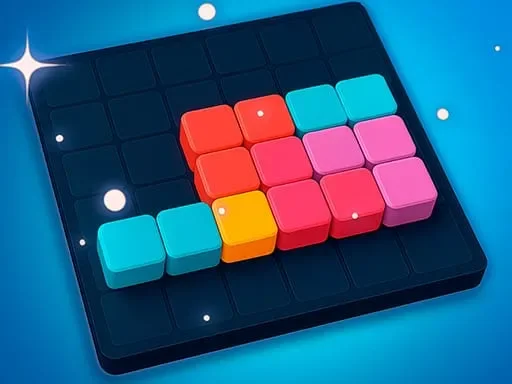
Block Puzzle


Rating:
4.40
Played:
10,155
What Is Block Puzzle?
Block Puzzle is a grid based logic game where you place shaped pieces onto a board and clear space by completing full rows or columns. The rules are easy to read in seconds, yet the game becomes deeper the longer you survive. Every placement changes the value of the next one, so strong runs come from planning ahead rather than clicking fast. That balance between simple controls and thoughtful decision making is what makes Block Puzzle such a durable browser favorite.
How to Play in Your Browser
On stickwargame.org, Block Puzzle launches right in the browser, so you can start without installing anything. Open the game page, wait for the board and piece tray to appear, then drag each shape into an empty area of the grid. When you place the current set, a new set appears. The game continues until one of the remaining shapes no longer fits anywhere on the board.
Many players first notice Block Puzzle on standalone puzzle sites, but the browser version here offers the same satisfying core loop in a quick, clean session. You can jump in for a short score chase, restart immediately after a mistake, and keep testing new board management ideas without breaking your pace.
The real objective
Your visible goal is to clear lines. Your deeper goal is to keep the board flexible enough for future shapes. A board with many empty squares is not always healthy if those spaces are split into tiny pockets. A board that looks crowded can still be safe if it contains wide connected lanes. Learning to value useful space over raw empty space is the key skill in Block Puzzle.
Controls and Core Rules
Drag, drop, and place carefully
Desktop controls are simple: click a piece, drag it over the board, and release it where it fits. On mobile, you press with your finger and slide the shape into place. If the position is valid, the game locks it onto the grid. If not, the piece returns to the tray. Because the interaction is so direct, the game feels smooth even for first time players.
Most versions are built around fixed shapes, which means you usually place pieces exactly as they appear. You are not solving a reaction test. You are solving a placement problem. That is why it helps to pause before your first move and inspect the full set of current blocks. One rushed choice can remove the only space large enough for a long bar or square piece later.
How line clears work
When you fill a complete horizontal row or vertical column, that line disappears and gives space back to the board. Multi-line clears are especially valuable because they repair messy areas and open new routes through the center. Still, survival matters more than showing off. A modest clear that preserves flexibility is often better than a dramatic move that leaves the board broken into awkward gaps.
Tips for Better Scores
Keep the center useful
The middle of the board connects the most future possibilities, so it is dangerous to clog it with random placements. Try to solve easy edge spaces first and use the center only when it truly improves your options. Protecting that central freedom makes the whole board easier to manage.
Save room for difficult shapes
Long bars, chunky squares, and wide corners often decide whether a run lives or dies. Try to preserve at least one open zone that can accept a large piece later. Connected empty space is far stronger than the same number of isolated single squares.
Think in short sequences
Good players do not evaluate one piece by itself. They compare all current shapes and imagine how the first placement changes the next two. Sometimes the best opening move does not clear a line immediately. It sets up a better sequence across the whole tray. That habit alone can raise your score quickly.
Avoid trap holes
Small isolated holes are dangerous because only a limited set of pieces can repair them. If too many of those gaps appear, the board starts to look open but becomes much harder to use. When in doubt, choose the move that leaves cleaner, wider spaces.
Why Block Puzzle Remains Popular
Block Puzzle belongs to a long line of shape based board games that turn simple geometry into satisfying strategy. Its modern browser style keeps the visual clarity people love about classic block puzzlers, but it removes the speed pressure and lets players focus on planning. That slower pace gives the game broad appeal. It works for short breaks, long score chasing sessions, and quiet play when you want something thoughtful but not stressful.
Common Questions About Block Puzzle
Is Block Puzzle free to play?
Yes. You can play it on stickwargame.org in your browser without downloading software or creating an account first.
Can I play on mobile?
Usually yes. The drag based controls work naturally on touch screens, so mobile play feels intuitive when the page loads well in your device browser.
Does the game ever end?
Most versions are score based. A run ends when one of the current pieces no longer has any valid place on the board.
Is the game mostly luck?
Shape order matters, but skill matters more across many runs. Strong players manage space well enough to stay ready for difficult pieces before they appear.
What is the best beginner strategy?
Protect the center, use the edges with purpose, and check every piece in the tray before placing the first one. That simple routine prevents many avoidable endings.
Why do strong runs collapse so fast?
Usually because the board became fragmented. When empty squares are split into narrow pockets, even a half open board can become impossible to use efficiently.
Ready to Start?
Block Puzzle is easy to learn, quick to load, and satisfying for players who enjoy calm strategy. If you like clearing lines, managing space, and improving through smart decisions instead of fast reflexes, it is a great game to keep in your browser rotation. Start a round on stickwargame.org, think a few moves ahead, and see how long you can keep the board alive.
Comments
Loading comments…