Happy Glass


Rating:
4.50
Played:
10,739
What Is Happy Glass
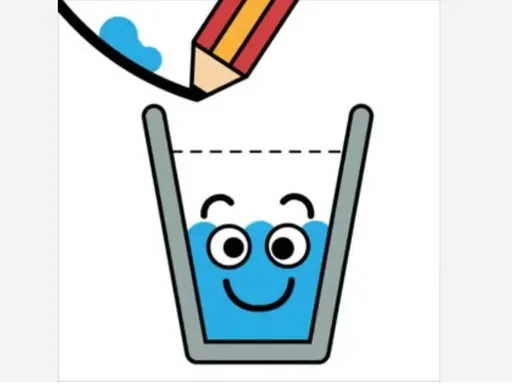
Happy Glass is a physics puzzle where you draw lines to guide water into an empty cup and make it smile again. Small ramps and barriers turn each stage into a quick gravity test. Your job is to draw one or more lines that redirect the water so enough of it lands inside the glass. The idea is easy to understand in a few seconds, but the outcomes can change dramatically depending on where you start a line, how long you make it, and how much you trust gravity to do the work.
The browser version of Happy Glass keeps that same simple hook. You are not managing a big set of menus or complicated systems. Instead, each stage asks a small focused question: what is the cleanest shape that can guide the stream into the cup? Because the answer is rarely about drawing the biggest wall, the game feels playful and thoughtful at the same time. A short curve can outperform a messy sketch, and one precise line can solve a stage that looked impossible at first glance.
How a Round Usually Plays Out
Most levels begin with the water source above the glass. Sometimes the path is open and you only need a small ramp. Sometimes the glass sits on a platform that tilts, slides, or leaves very little room for error. You draw directly on the screen, then the level starts reacting to your shape. Water flows, bounces, spills, and settles according to the line you created. If the glass reaches the marked fill level, its face changes and the level is complete.
Why the puzzles stay interesting
Happy Glass repeats the same main objective across many stages, yet it avoids feeling flat because the obstacles keep changing. Some levels ask you to shield the water from spilling off an edge. Others want you to support the cup so it does not tip over while filling. A few stages are really about timing and balance, where a line must act as both a bridge and a stopper. Since the game reuses a clear ruleset instead of teaching new buttons every few minutes, improvement feels earned.
Playing in a Browser on This Site
On this site, the appeal of Happy Glass is how quickly it fits into a short session. You can load the page, start a level, test an idea, and retry instantly if it fails. That rhythm matters because this is a trial-and-observation puzzle. A failed attempt is not really wasted time. It shows you which slope was too steep, where the water escaped, or whether the glass needed support before the stream arrived.
Browser play also makes the game comfortable across devices. On desktop, a mouse helps with accurate ramps and tight curves. On mobile or tablet, touch control feels natural because the core action is tracing a line with your finger.
Controls
Desktop controls are straightforward. Click and drag to draw a line, then release to let the level react. If your version starts the water automatically, your line placement matters immediately. If it gives you a brief pause, use that moment to check whether the shape really blocks the obvious leak points. On touch devices, tap and drag with one finger to make the same kind of line. Since your drawing becomes part of the level's physics, a steady motion usually works better than a jagged sketch.
Tips That Help on Harder Levels
The most useful beginner habit is to stop drawing so much. Players often assume more ink means more control, but large shapes create extra surfaces for water to bounce off. When a stage goes wrong, the fix is often to simplify. Build a small ramp near the source, or add a short lip near the cup to catch the final droplets. Let gravity do the heavy lifting whenever possible.
A second strong habit is to pay attention to the glass itself, not only the stream. Some stages are lost because the cup tips, slides, or gets nudged before it can fill. In those cases, the best first line may be a brace under the base rather than a channel for the water. Once the cup is stable, the rest of the puzzle becomes much easier to read.
It also helps to watch where the first few drops travel. If the opening droplets already miss the target, your line probably needs to begin earlier or curve more gently. If the stream reaches the rim but splashes out, soften the angle instead of building a giant container around the cup.
Common mistakes to avoid
The biggest mistake is drawing directly above the cup without planning the full path. That can make water fall too fast and rebound out of the glass. Another common problem is sealing off the source accidentally with a line that blocks the stream before it can build momentum. Rather than changing everything after one failure, adjust one part of the design and test again.
Background and Release Context
Happy Glass became widely known through mobile stores, where its clean concept and quick levels made it easy to pick up for a few minutes at a time. Public release listings place the game in 2018, and Lion Studios' official store descriptions present it as a puzzle about drawing lines freely to fill the glass. That background matters because the browser version still feels like a mobile-first idea in the best sense: immediate objective, very readable feedback, and levels short enough to invite one more try.
Even with that casual structure, the design has real staying power. You fail, notice one overlooked angle, redraw a cleaner line, and suddenly the level works with almost no wasted motion. That cycle is why the game stays satisfying for both new players and people who enjoy chasing cleaner solutions.
Frequently Asked Questions
Is Happy Glass easy for beginners to learn?
Yes. The goal is visible right away: guide water into the cup until it reaches the fill line. You can understand the basics in one level, then learn the deeper tricks by experimenting with ramps, barriers, and supports.
Do I need fast reflexes to play well?
No. This is mainly a thinking puzzle. Careful observation and cleaner line placement matter far more than quick reactions, which makes the game approachable even when later stages become more demanding.
What makes a level earn a better result?
In most versions, the game rewards efficient solutions. Using less ink and guiding the water with a smarter path often produces a stronger score than solving the level with a huge complicated drawing.
Why does the water keep missing the cup in some stages?
Usually the slope is too steep, the first contact point is too late, or the cup is unstable. Try starting your line closer to the source, smoothing the curve, or supporting the cup before you worry about the stream itself.
Can I enjoy Happy Glass on mobile and desktop?
Yes. The controls suit both formats well. Mouse input helps with precise shaping on desktop, while touch input feels natural on phones and tablets because the core action is drawing a line with your finger.
Does every level have only one solution?
No. One of the fun parts of Happy Glass is that many levels allow multiple working ideas. You may clear a stage with a safe bulky drawing first, then replay it and discover a smaller, cleaner answer.

Comments
Loading comments…